
The Mojtaba Doctrine
Iranian Supreme Leader Mojtaba Khamenei is crafting a strategic doctrine at home and abroad more confrontational than his father before him.

On August 9, Major General Mohsen Rezaee, approaching 72 years old and still an officer in the Islamic Revolutionary Guard Corps, was appointed Secretary of Iran’s Supreme National Security Council. An active member of the military leading the council is not unheard of, but while other military and political appointments this week have been mostly formal, with the Supreme Leader granting acting leaders official titles after Israel assassinated their predecessors, Rezaee’s appointment has been unusually contentious.
Mohammad Bagher Zolghadr, when he was appointed to lead the SNSC in March after the assassination of Ali Larijani, was already considered an especially hardline figure, close to the military establishment, and, in contrast to Larijani, held much less belief in compromise. Zolghadr had been hailed as a “tireless fighter”, a “treasure” of the Iran-Iraq War in which he led the predecessor to the Quds Force, and would soon confront the “American-Zionist executioner” with great zeal and fervor.
As early as 2002, while still a Brigadier General, Zolghadr had clashed with allies of then-President Rafsanjani over his insistence that any strike on Iran should lead to the destruction of regional oil infrastructure. Zolghadr had long planned for a day in which negotiations would evaporate and America would fire its weapons, and as the Islamabad Memorandum failed, Zolghadr dug in his heels as secretary, stating that the attacks on American assets in the region, what he called the “lashes of anger of the Iranian nation” against the “system of domination”, would only cease when the enemy declared its “complete surrender.”
But even this was not enough for Mojtaba Khamenei, the new Leader of the Islamic Revolution. Despite the overwhelming majority of the SNSC having voted in favor of the Islamabad Memorandum, Saeed Jalili (the personal representative of the Supreme Leader on the council) included, Mojtaba had made the unprecedented move when the agreement was signed of stating that he held a “different view” than those who had negotiated it. The Supreme Leader then stated that he had only given “permission” for negotiations to continue with the understanding that any “excessive demands” by the United States would not be accepted. The agreement, of course, fell apart almost immediately. Zolghadr, now seen as apparently too close to lead negotiator Mohammad Bagher Ghalibaf (no relation), was now a liability, evidence, according to Mojtaba’s strongest backers in parliament, of President Masoud Pezeshkian seeking to undermine the wishes of the Supreme Leader. The text announcing Zolghadr’s ascension, indicating that he had been appointed “with the view and approval of the esteemed Leader”, was of no matter.
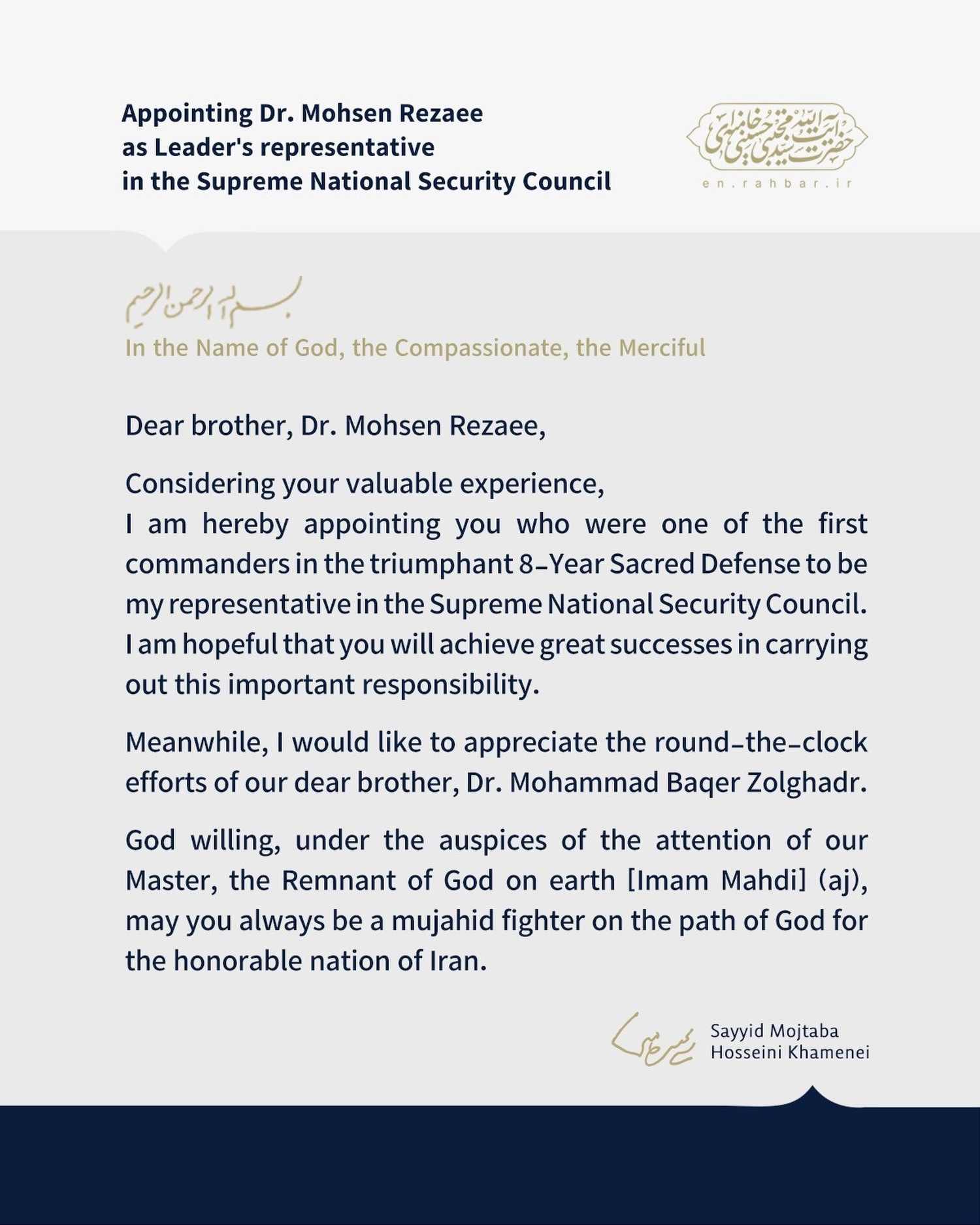
Mojtaba needed a secretary on the council who aligned even more with his skepticism of negotiations, who would not merely hope the massive concessions given by the United States for full sanctions relief would come to pass, but would instead extract them, demand concrete steps, and make them Iran’s inalienable rights. In addition to being appointed the new Secretary of the SNSC, a request approved by the president after a 7-hour meeting with Mojtaba that same day, Mohsen Rezaee was also announced as the personal representative of the Supreme Leader to the council. Zolghadr was given no such designation.
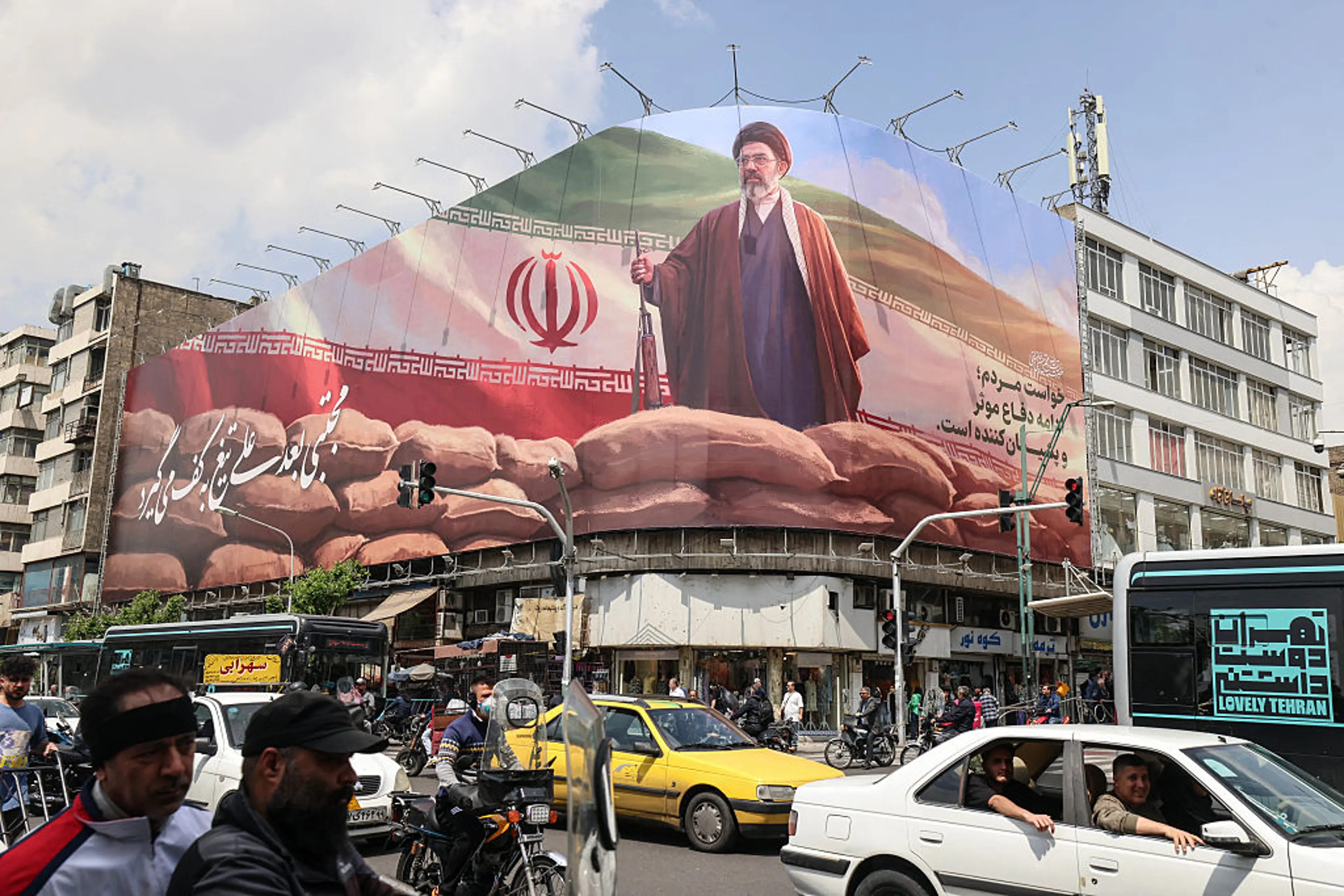
Since his election by the Assembly of Experts to the highest office in the land, Mojtaba Khamenei, the son of the assassinated Ali Khamenei, has not been seen in public. He has not been filmed, photographed, or even had his voice recorded. His speeches to the nation have been broadcast on state television via recordings of another, and even before his sudden ascension, only a single, pixelated video of him speaking out loud, from an unknown time, was available online. Scarred and severely injured from an attempt on his life, his wife killed in the explosion that also killed his father and many others in the complex that housed them, Mojtaba Khamenei’s location and whereabouts have been closely guarded, only known to a select few to the point where Foreign Minister Abbas Araghchi, despite ostensibly carrying out his will in the negotiations with the Americans, has not met him.
Attempts to meet him by foreign leaders, like Pakistani Prime Minister Shehbaz Sharif, have not materialized. US Secretary of State Marco Rubio has claimed that problems in negotiations have stemmed from delays in trying to physically reach the Supreme Leader for his opinion, with American conservative media outlets and Iranian opposition figures claiming that Mojtaba was being kept from the rest of the government so that others could speak for him.
While the IRGC simply speaking for an incapacitated Supreme Leader may have been a convincing narrative to some in the early days of his leadership, events since the ceasefire was declared in April have revealed that the new Khamenei is exercising increasing control over the state, even from his undisclosed location. Mojtaba Khamenei is asserting a new doctrine of confrontation with the West where old beliefs regarding the power of negotiations have dissolved, and is building an administration where the Supreme Leader’s authority and influence are exercised against the elected government in a way it has not in years, if not decades.
